At-Home Bubble Tea with Popping Boba

At-Home Bubble Tea with Popping Boba
At-home bubble tea is one of the clearest and most commercially relevant retail uses for popping boba because it gives shoppers an immediate and easy-to-understand use occasion.
Instead of selling a vague ingredient idea, it sells a drink experience consumers can picture straight away. As more shoppers look for café-inspired products they can enjoy at home, popping boba offers a simple way to bring bubble tea into a format that feels accessible, convenient and easy to recreate.
This makes at-home bubble tea especially attractive for retail brands looking to build a concept around clear shopper understanding, flavour variety and an obvious reason to buy.
Why At-Home Bubble Tea Works So Well in Retail
At-home bubble tea works especially well in retail because the consumer can picture the end result immediately.
The product is not just an ingredient. It is part of a recognizable drink experience that feels trend-led, flavourful and easy to recreate at home. That makes it much easier to position on shelf than a more abstract drink add-on concept.
For retail brands, this creates a strong combination of:
- a familiar café-inspired trend
- a clear use occasion
- visible flavour and colour appeal
- easy home customization
That combination gives the category a much stronger retail story.
Three Commercial Routes to Consider
In retail, at-home bubble tea with popping boba can take several commercially relevant forms. For brands, three routes are especially clear and easy to build around:
- fruit tea bubble tea concepts
- milk tea-inspired bubble tea concepts
- tropical or seasonal iced tea bubble tea concepts
Each route gives popping boba a slightly different role while still keeping the product easy to understand and easy to use at home.
1. Fruit Tea Bubble Tea Concepts
Fruit tea bubble tea is one of the most natural retail routes for popping boba.
This format works especially well because the flavour logic is simple, colourful and easy for consumers to understand. The pearls can either match the main drink flavour or create a contrast that still feels intuitive, which makes the final concept easier to picture and recreate at home.
For retail brands, fruit tea concepts are useful when the goal is to create a bright, approachable and flavour-led at-home bubble tea product with strong shopper appeal.
Typical directions might include peach tea with lychee popping boba, green tea with mango popping boba, berry fruit tea with strawberry pearls or tropical iced tea with mixed fruit popping boba.

2. Milk Tea-Inspired Bubble Tea Concepts
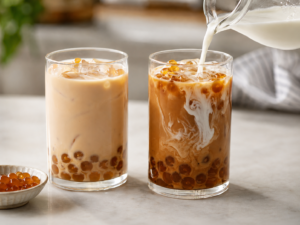
Milk tea-inspired bubble tea concepts are another strong route because they connect directly to one of the most recognizable bubble tea occasions.
In this format, popping boba can help create a product that feels café-inspired and indulgent while still being accessible for home use. The contrast between a creamy tea base and bright pearls can create a visually distinctive drink that still feels easy for the shopper to understand.
For retail brands, this route is useful when the goal is to create an at-home bubble tea concept that feels slightly more treat-led or premium while staying rooted in a familiar format.
Typical directions might include milk tea with strawberry popping boba, peach milk tea with lychee pearls or a lighter tea latte-style concept with mango popping boba.
3. Tropical or Seasonal Iced Tea Bubble Tea Concepts
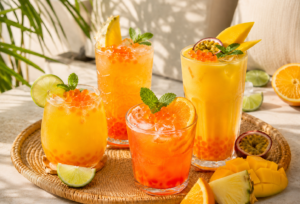
Tropical or seasonal iced tea bubble tea concepts are a strong route when the goal is to create something more colourful, promotional or variety-led.
In this format, popping boba can help the drink feel more playful and more suited to seasonal flavour stories while still keeping the product rooted in the broader at-home bubble tea occasion. This can be especially useful for summer launches, limited-edition ranges and mix-and-match flavour concepts.
For retail brands, this route offers a practical way to create a more noticeable and campaign-friendly concept without changing the core shopper understanding.
Typical directions might include passion fruit iced tea with mango pearls, tropical fruit tea with mixed fruit popping boba or a berry summer tea with strawberry pearls.
A Product Shoppers Can Understand Quickly
One of the biggest strengths of at-home bubble tea is how quickly the product communicates its purpose.
The shopper can imagine the drink, understand the role of the pearls and see how the product fits into a simple at-home routine. That matters in retail, where products often need to explain themselves in only a few seconds.
Popping boba helps because it creates:
- a visible flavour cue
- a more distinctive final drink
- a clear point of customization
- a more rewarding at-home experience
For retail brands, that makes the category easier to merchandise than concepts that need more explanation or a less obvious end use.
Strong Fit for Convenience and Customisation
Another reason at-home bubble tea works so well in retail is that it combines convenience with customization.
Consumers can create a drink that feels more personal without needing specialist equipment or complicated preparation. That makes the concept especially attractive in retail formats built around:
- easy home use
- flavour exploration
- fun drink occasions
- family or shared use
- weekend or treat-based consumption
Popping boba adds enough customization to make the drink feel personal and exciting, but not so much that the product becomes complicated.
Stronger Retail Logic with Small, Flexible Pack Sizes
For this category, retail format matters.
A smaller format is often easier for shoppers to try, easier to combine with other flavours and easier to use as part of a mix-and-match purchase. That is one reason 250 g tubs are often the most flexible retail option for at-home bubble tea.
They can support a stronger shelf offer because shoppers are more likely to try multiple flavours when the unit size feels manageable. In many cases, offering two or three variants creates a more attractive retail concept than relying on a single flavour alone.
500 g tubs can still make sense in some cases, especially where the concept is built around repeat use or stronger household consumption, but 250 g is often the more practical starting point for this category.
Good Potential for Multi-Flavour and Seasonal Concepts
Because bubble tea is already associated with flavour variety, at-home bubble tea also works well with:
- mixed flavour ranges
- seasonal launches
- tropical concepts
- limited-edition combinations
- colourful promotional themes
For retail brands, this creates room for innovation without changing the core usage story. The shopper still understands the product, but the flavour mix or seasonal direction gives the range something fresh to offer.
That can be especially useful for summer promotions, gifting periods or trend-led retail campaigns.
A Strong Fit for Trial and Repeat Purchase
At-home bubble tea is also commercially attractive because it can support both trial and repeat use.
The first purchase may be driven by curiosity, flavour interest or the appeal of recreating a café-style drink at home. Repeat purchase is more likely when the concept feels:
- easy to use
- easy to enjoy again
- versatile across multiple drink occasions
- fun without being confusing
That is one of the biggest strengths of this category. When positioned well, it can become a repeatable at-home treat or drink ritual rather than a one-time novelty purchase.
Practical Considerations for Retail Brands
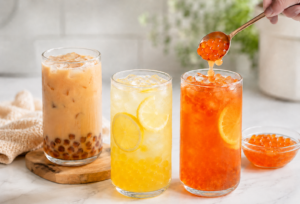
When evaluating at-home bubble tea with popping boba, a few practical points matter.
Keep the use occasion clear
The product should immediately communicate that it is designed for easy at-home bubble tea creation.
Build around intuitive flavours
The strongest retail concepts are usually those with flavour combinations consumers can understand quickly.
Use consumer-friendly retail sizes
For this category, 250 g tubs are often the strongest starting point because they support easier trial and mix-and-match behaviour. 500 g tubs can also work where a larger repeat-use format is relevant.
Consider offering a small flavour set
Two or three variants can often create a stronger shelf story than a single SKU on its own.
Make the product easy to picture in use
At-home bubble tea works best when the final drink is easy for the shopper to imagine and recreate.
Support both trial and repeat use
The concept should not only feel exciting the first time, but also simple enough to enjoy again.
Why This Is One of the Strongest Retail Uses for Popping Boba
Among retail uses, at-home bubble tea remains one of the clearest ways to position popping boba around a strong end-use experience.
It offers:
- strong shopper understanding
- a clear built-in use occasion
- easy home preparation
- bright flavour and colour cues
- good potential for variety and repeat purchase
For retail brands looking to create a more obvious and more commercially intuitive popping boba concept, this is one of the best places to start.
Why Choose Nordic Boba
At Nordic Boba, we support retail customers with popping boba developed for Western markets and real commercial use. With European production, certified manufacturing and scalable supply, we help brands create retail concepts that feel easier to merchandise, easier to use and easier for consumers to enjoy at home.
For retail ranges, we offer 250 g tubs and 500 g tubs, with 250 g often being the most flexible format for at-home bubble tea concepts. We also support white-label projects for brands looking to launch their own retail range with a clear flavour story and consumer-friendly positioning.