10 Ways Food & Beverage Manufacturers Use Popping Boba
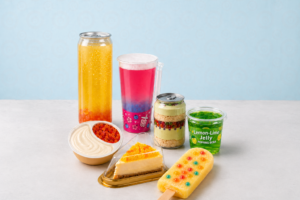
Popping boba has moved beyond bubble tea and is now being used across a growing range of beverage and dessert concepts in food and beverage manufacturing.
For manufacturers, the appeal is clear. It adds a visible, consumer-friendly point of difference through flavour, texture and visual impact. Whether the goal is to create a more distinctive RTD launch, refresh a structured dessert line or build a stronger limited-edition concept, popping boba can help products stand out without requiring a completely new platform.
At Nordic Boba, we work with manufacturers looking to develop products that are visually strong, commercially relevant and realistic to scale. In manufacturing, the strongest applications are usually the ones where the role of the pearls is clear, the product architecture supports visibility and the final system has been matched carefully to the inclusion. Here are 10 of the clearest ways popping boba adds value across modern food and beverage categories.
Beverage Applications
1. RTD Beverages
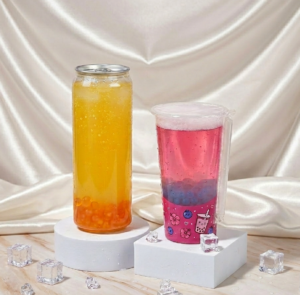
RTD beverages are one of the clearest opportunities for popping boba in food and beverage manufacturing. In categories where shelf impact and sensory differentiation matter, popping boba adds a visible inclusion that consumers can immediately understand.
This makes it especially relevant for fruit-based RTD beverages, tea-based concepts and chilled or novelty launches where brands want to create something more memorable than a standard flavoured drink. The pearls can reinforce the flavour story while also giving the product a stronger visual cue on shelf.
At the same time, RTD is also one of the categories where the surrounding liquid system matters most. Flavour expression, colour behaviour and contrast can change over time depending on the beverage design, so the strongest RTD concepts are usually the ones that have been tested in the final system rather than judged only at concept stage.
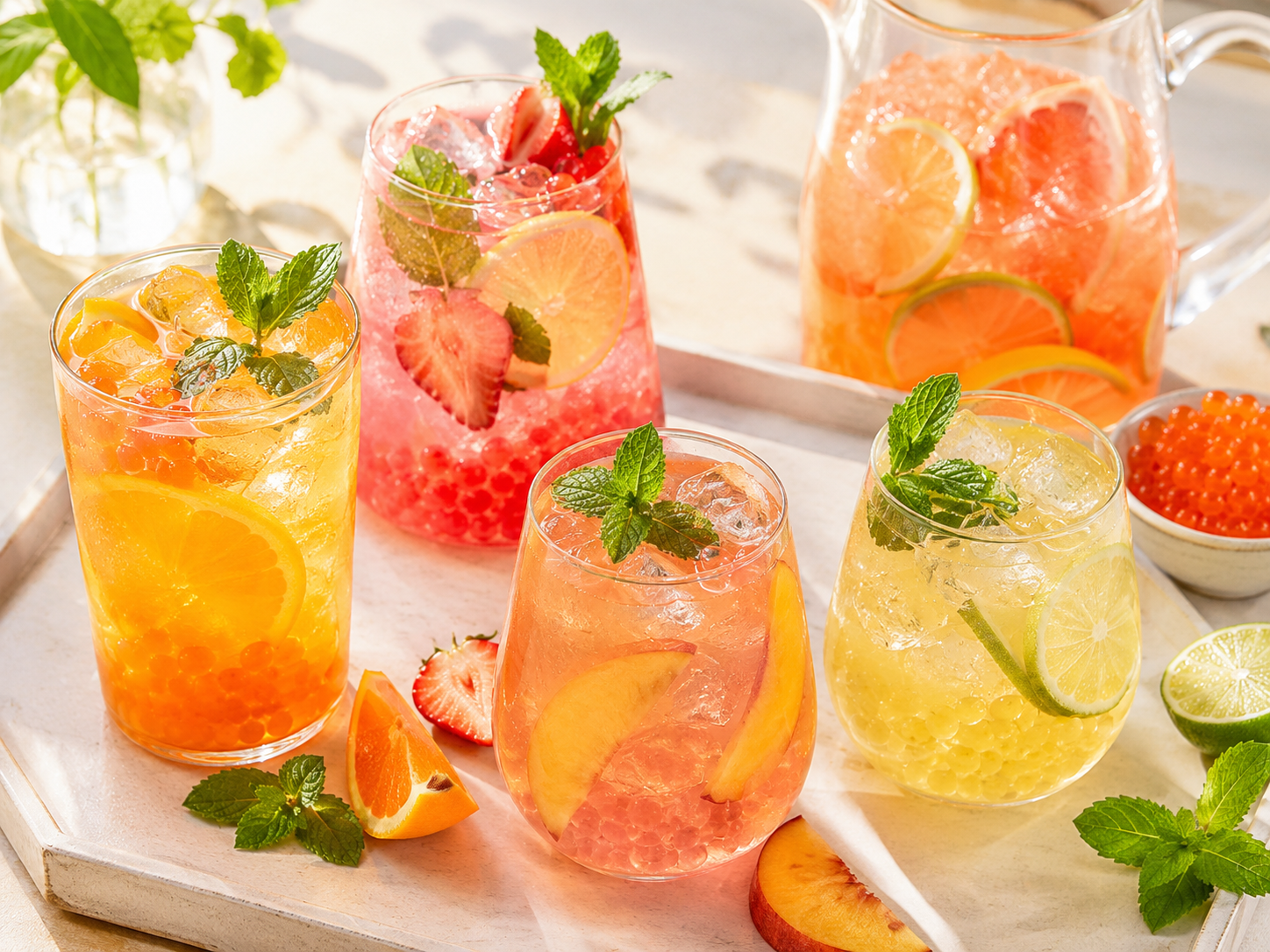
Examples include fruit-led RTD beverages with mango or strawberry popping boba, tea-based ready-to-drink concepts with lychee or peach pearls, and novelty beverage launches built around tropical flavour combinations.
Click here to see more RTD applications.
2. Dairy Beverages and Drinkable Desserts
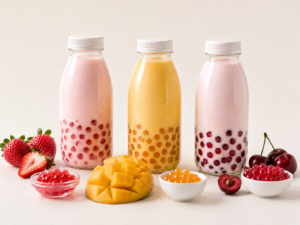
Dairy beverages and drinkable desserts are a more specific opportunity than general RTD. Here, the smooth base and creamy mouthfeel create a strong contrast with the burst and texture of popping boba.
This format can work especially well for products positioned as indulgent, modern or slightly more playful without losing mass-market accessibility. It can also give manufacturers a way to add visible differentiation in categories where texture and flavour layering already matter.
However, this is also an application where product-system fit matters. The final result depends on how the pearls behave in the surrounding dairy base over time, so the strongest concepts are the ones where flavour role, visibility and final texture have all been assessed in the intended product structure.
Concept directions include drinkable yogurt-style products with strawberry popping boba, tropical dairy beverages with mango pearls, or dessert-style dairy drinks with contrasting fruit inclusions.
Click here to see more diary applications.
Chilled and Spoonable Dessert Applications
3. Yogurt and Dairy Desserts
Yogurt and dairy desserts can be a promising application for popping boba, especially when the pearls remain more visible and more distinct within the final product structure.
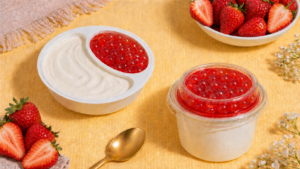
For manufacturers, this is most useful in layered formats, fruit-on-bottom concepts, topping sections or visible compartments where the inclusion helps reinforce both flavour and shelf impact. In these formats, the pearls can add contrast and a more modern cue without moving too far away from familiar dairy expectations.
This category is more application-sensitive than some of the others. Based on current experience, concepts where the pearls are fully mixed into the dairy base from the beginning may be less reliable than formats where they remain more separated, because flavour and colour behaviour can shift over time.
Examples include vanilla yogurt with strawberry popping boba in a visible layer, tropical dairy desserts with mango pearls in a separate fruit section, and layered berry desserts with mixed fruit inclusions.
Click here to see more dairy and yogurt applications.
4. Dessert Cups
Dessert cups are one of the strongest structured dessert formats for popping boba because they make the inclusion easy to see and easy to understand.
Their layered architecture allows manufacturers to combine colour, flavour and texture in a way the consumer can notice immediately. This makes them highly relevant for products where shelf impact matters as much as flavour.
Popping boba works especially well alongside mousse, pudding, cream or fruit layers, where the contrast between smooth and juicy textures helps create a stronger final concept.
Examples include layered fruit mousse cups, mango pudding cups with popping boba, berry cream desserts with fruit pearls and tropical dessert cups with multiple fruit components.
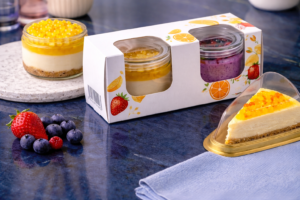
5. Layered and Multi-Component Desserts
Beyond standard dessert cups, popping boba also works well in layered and multi-component desserts where the goal is to build a more premium, modern or sensory-driven experience.
In these formats, the pearls can act as a visible hero inclusion within a more complex product architecture. That makes them especially useful in concepts where brands want to combine fruit, cream, mousse, jelly or sauce elements into one finished product.
For manufacturers, this is one of the strongest routes when developing products that need to feel more premium and more differentiated than a single-texture dessert. The clearer the role of the pearls in the structure, the stronger the concept usually becomes.
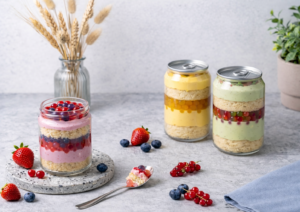
6. Jelly Cup Concepts
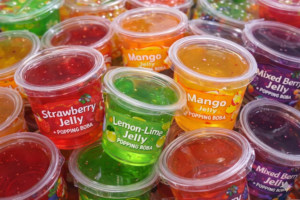
Jelly cup concepts offer a strong textural fit for popping boba because they combine a soft gel structure with the burst of a liquid-filled pearl.
The result can feel bright, refreshing and visually lively. This category is particularly relevant where brands want to create a fruit-led snack or dessert concept that feels more playful without becoming confusing.
Because both jelly and popping boba are highly sensory, the pairing can feel natural rather than forced. It is also a category where the pearls can stay more distinct within the final format, which helps preserve their role in the concept.
Examples include tropical jelly cups with mango popping boba, berry jelly concepts with strawberry pearls, and citrus-led cups with peach or lychee inclusions.
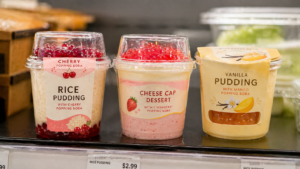
7. Puddings and Spoonable Desserts
Puddings and spoonable desserts are another relevant area for popping boba because they provide a smooth, familiar base that benefits from textural contrast.
Here, the pearls can add variation in mouthfeel while reinforcing the fruit or flavour direction of the product. This can be a useful way for manufacturers to refresh established dessert categories with a more contemporary feel while still keeping the concept approachable.
As with other spoonable formats, the strongest concepts are usually the ones where the pearls are visible enough to contribute to the overall product identity rather than disappearing into the product.
Examples include vanilla pudding with mango popping boba, berry pudding with strawberry pearls, and tropical cream desserts with mixed fruit inclusions.
Frozen Applications
8. Ice Cream and Frozen Desserts
Frozen desserts are another strong platform for popping boba, but the final result depends heavily on how the pearls behave under frozen conditions.
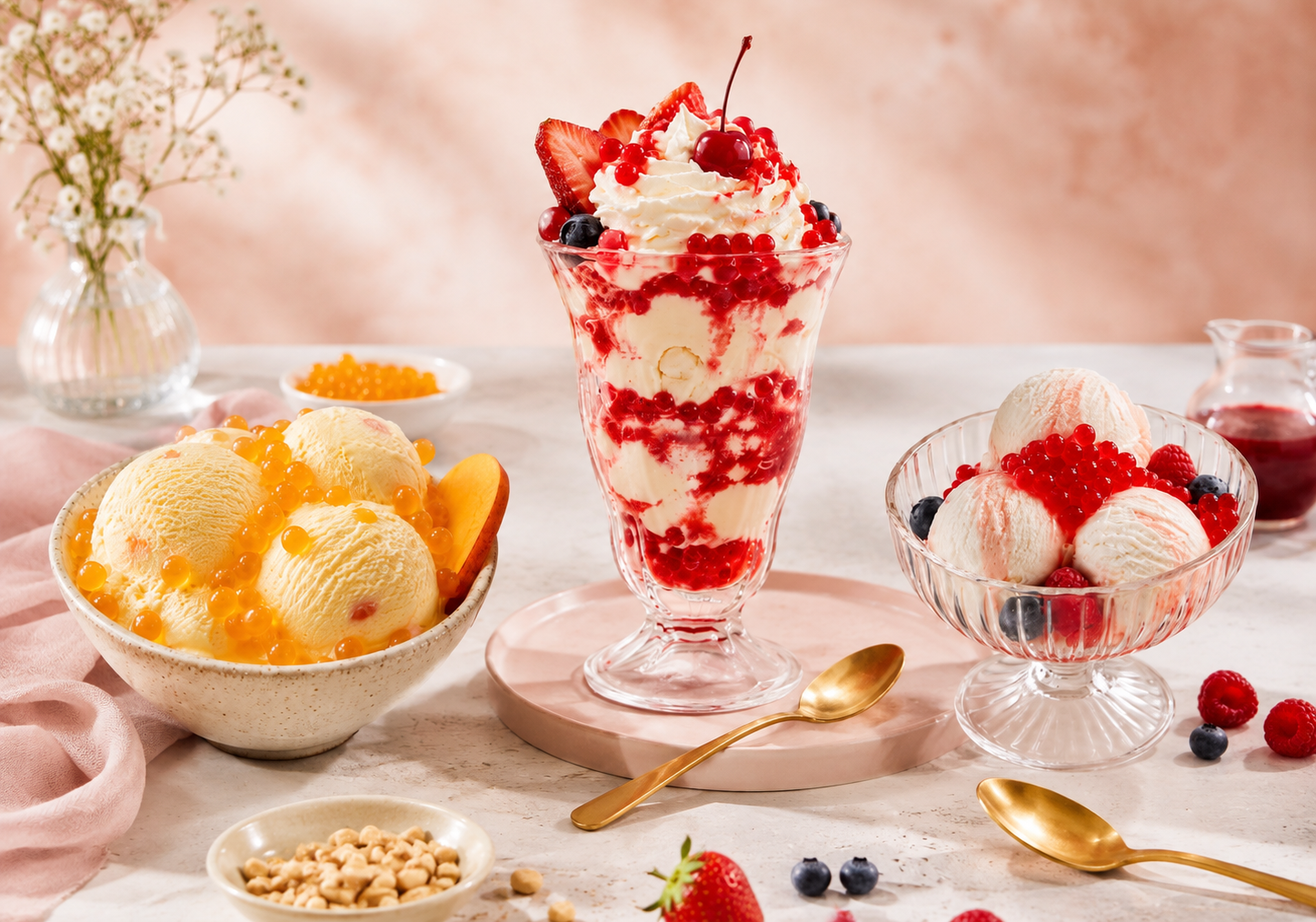
In this category, the pearls can add colour, flavour bursts and textural contrast against smooth or frozen bases, helping the final product feel more dynamic and more differentiated. This is especially relevant for premium tubs, layered frozen desserts and limited-edition frozen launches where visual excitement plays a major role in trial.
At the same time, frozen applications are not all the same. Standard popping boba can be frozen, but the pearls will typically feel firmer and harder in the final product. For applications where a softer, more syrupy frozen result is preferred, a higher-brix version may be more suitable.
That means frozen development is not only about flavour pairing. It is also about matching the pearl system to the intended eating experience.
Examples include vanilla frozen desserts with mango popping boba, berry ice cream concepts with strawberry pearls and tropical frozen desserts with passion fruit inclusions.
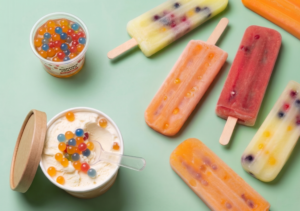
Click here to see more ice cream applications.
Strategic Innovation Routes
9. Seasonal and Limited-Edition Launches
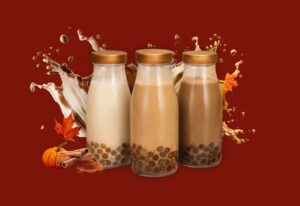
One of the strongest reasons manufacturers choose popping boba is its fit with seasonal and limited-edition launches.
Because the pearls are visually distinctive, they work well in products designed to create fast shelf impact and clear novelty cues. This is particularly useful in categories where seasonal rotation matters and where brands need the product to look different quickly.
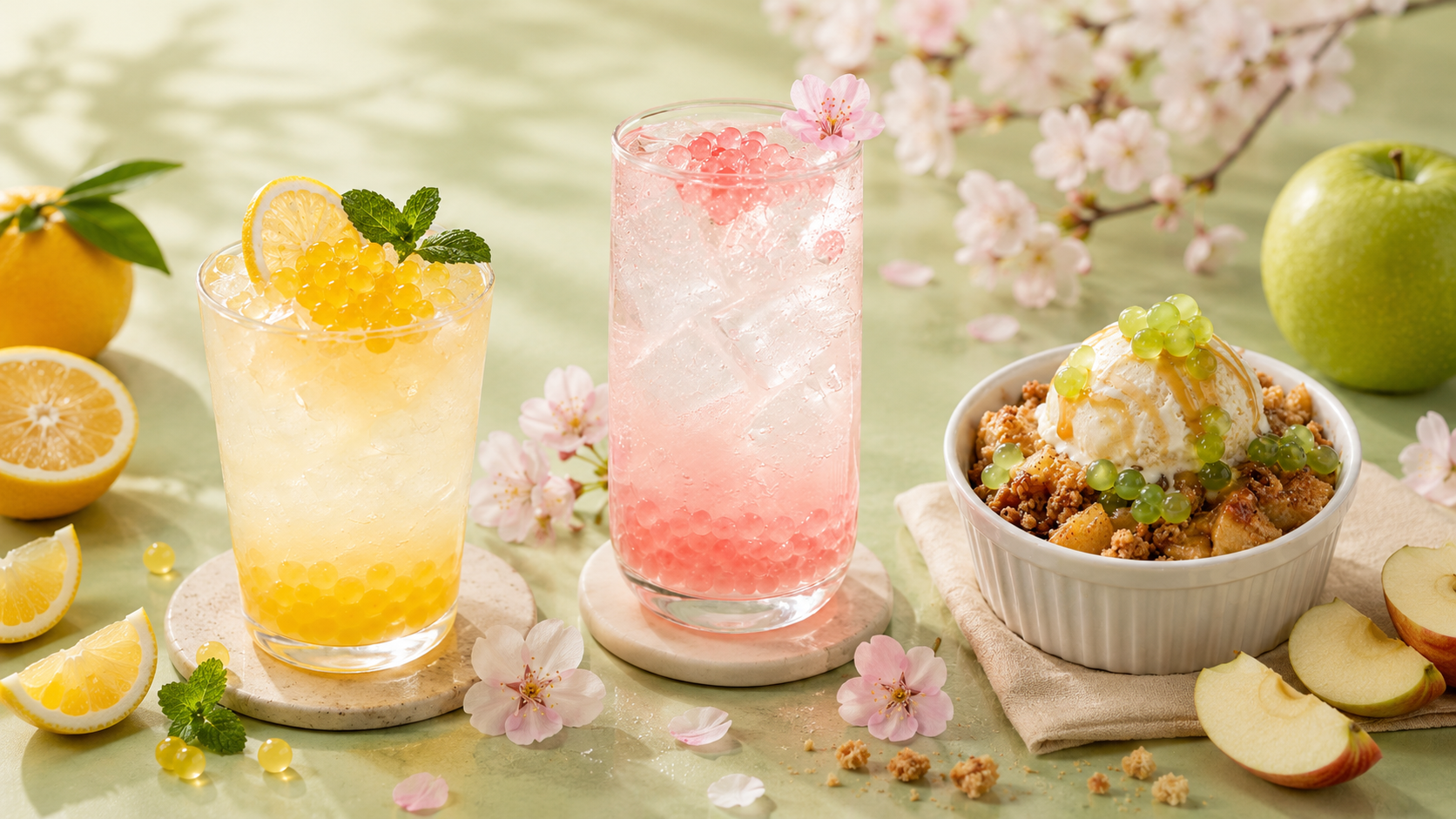
Popping boba can help support tropical summer launches, fruit-forward spring concepts and premium dessert or beverage innovations tied to specific campaign windows.
Examples include summer tropical beverages with passion fruit pearls, berry dessert cups for spring promotions and holiday-inspired dairy or frozen concepts with contrasting fruit inclusions.
10. Premium and Inclusion-Led Innovation
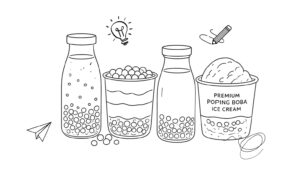
Beyond any single category, popping boba works well as part of a broader innovation strategy where the goal is to create a visible inclusion that signals flavour, texture and modernity in a way consumers can understand quickly.
That makes it relevant across beverage, chilled dessert, dairy and frozen formats where the brand wants a clearer point of difference without reinventing the entire product platform.
For innovation teams, this makes popping boba useful not only as a one-off application, but also as a tool for premiumisation, range refresh, limited-edition development and more visually distinctive product architecture.
Why Popping Boba Works for Food & Beverage Manufacturers
Popping boba offers more than novelty. For manufacturers, it can add real value across both product development and commercial positioning.
It can help brands create stronger shelf impact, introduce texture in a consumer-friendly way, reinforce fruit and flavour direction, support premium-looking concepts and build stronger seasonal or limited-edition launches. Because it works across multiple categories, it can also support a broader innovation pipeline rather than a single one-off concept.
The strongest results usually come when the pearls are matched carefully to the final product system, the intended texture outcome and the overall product architecture.
Practical Considerations for Manufacturers
When evaluating popping boba across food and beverage manufacturing, a few practical points matter.
Product fit
The chosen pearl flavour, size and concept should suit the base product and the final eating or drinking experience.
System behaviour
Some categories, especially RTD and dairy-based systems, require closer attention to flavour migration, colour behaviour and long-term contrast in the final product.
Product architecture
In many of the strongest applications, the pearls work best when they are visible and structurally intentional rather than buried in the product.
Frozen behaviour
Frozen applications need a clear decision on texture outcome. Standard pearls and higher-brix pearls can behave differently after freezing.
Visual impact
Popping boba works best when it is clearly visible and contributes to the overall product identity.
Application role
In some concepts, the pearls act as a highlight or premium cue. In others, they are a core part of the product experience. That role should be clear early in development.
Commercial scalability
The concept should not only work in development, but also support consistent commercial supply, processing fit and a realistic path to launch.
Industrial handling and supply format
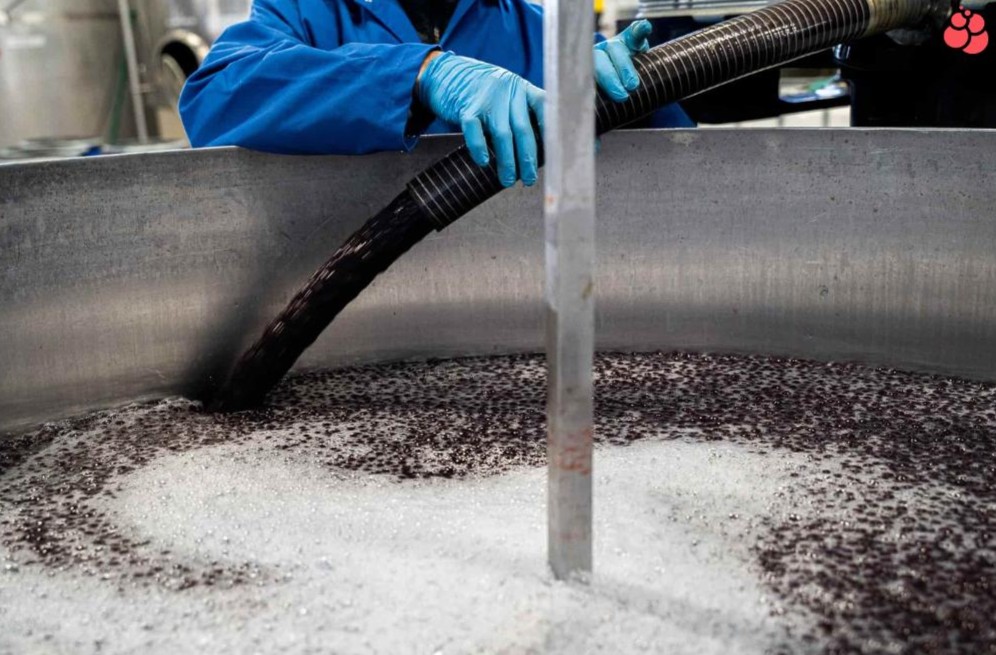
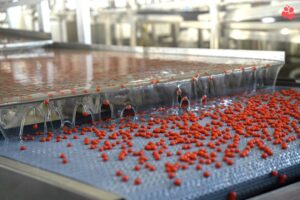
Depending on the application, manufacturers may require bulk supply and handling formats that suit industrial processing. Nordic Boba supports this with formats such as 135 kg barrels and 1,100 kg IBC tanks.
Why Choose Nordic Boba
At Nordic Boba, we support manufacturers with popping boba developed for real commercial use. With European production, certified manufacturing and scalable supply, we help brands move from application testing to commercial launch with stronger confidence in both concept fit and operational reality.
For manufacturers, that includes support across flavour direction, product architecture, system fit and industrial supply. Whether you are developing an RTD beverage, a layered dessert, a frozen concept or a seasonal launch, popping boba can help bring more texture, colour and differentiation to the final product.