Popping Boba in RTD Beverages
Popping Boba in RTD Beverages
RTD beverages are one of the strongest applications for popping boba in food and beverage manufacturing because they turn the inclusion into visible, shopper-friendly innovation.
In a category where brands compete on flavour, format and shelf impact, popping boba adds a point of difference consumers can see and understand quickly. A visible inclusion can help a beverage feel more current, more differentiated and easier to notice on shelf without requiring a completely new product platform.
At the same time, RTD is not only about visual appeal. It is also an application where product matching, liquid system design and pearl performance matter. That makes RTD commercially attractive, but also a category that benefits from careful development work.
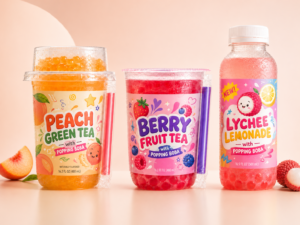
Why RTD Beverages Are Such a Strong Fit
RTD beverages are a strong fit for popping boba because they rely heavily on first impressions.
In crowded chilled and ambient categories, products often need to communicate flavour, format and difference quickly. Popping boba helps do exactly that. The pearls create a visible inclusion that reinforces flavour direction, adds textural contrast and gives the product a stronger identity on shelf.
For manufacturers, this is especially useful because not all innovation is easy to explain. Some product changes are subtle and difficult to communicate on pack. Popping boba is different. The product looks different before the consumer even tastes it. That makes RTD a strong category when the goal is to create something that feels innovative, but still familiar and commercially readable.
Three Commercial RTD Routes to Consider
RTD beverages with popping boba can take several commercially relevant forms. The right route depends on the target consumer, category role, shelf environment and production setup.
For manufacturers, three directions are especially easy to recognize:
- top-cup RTD formats
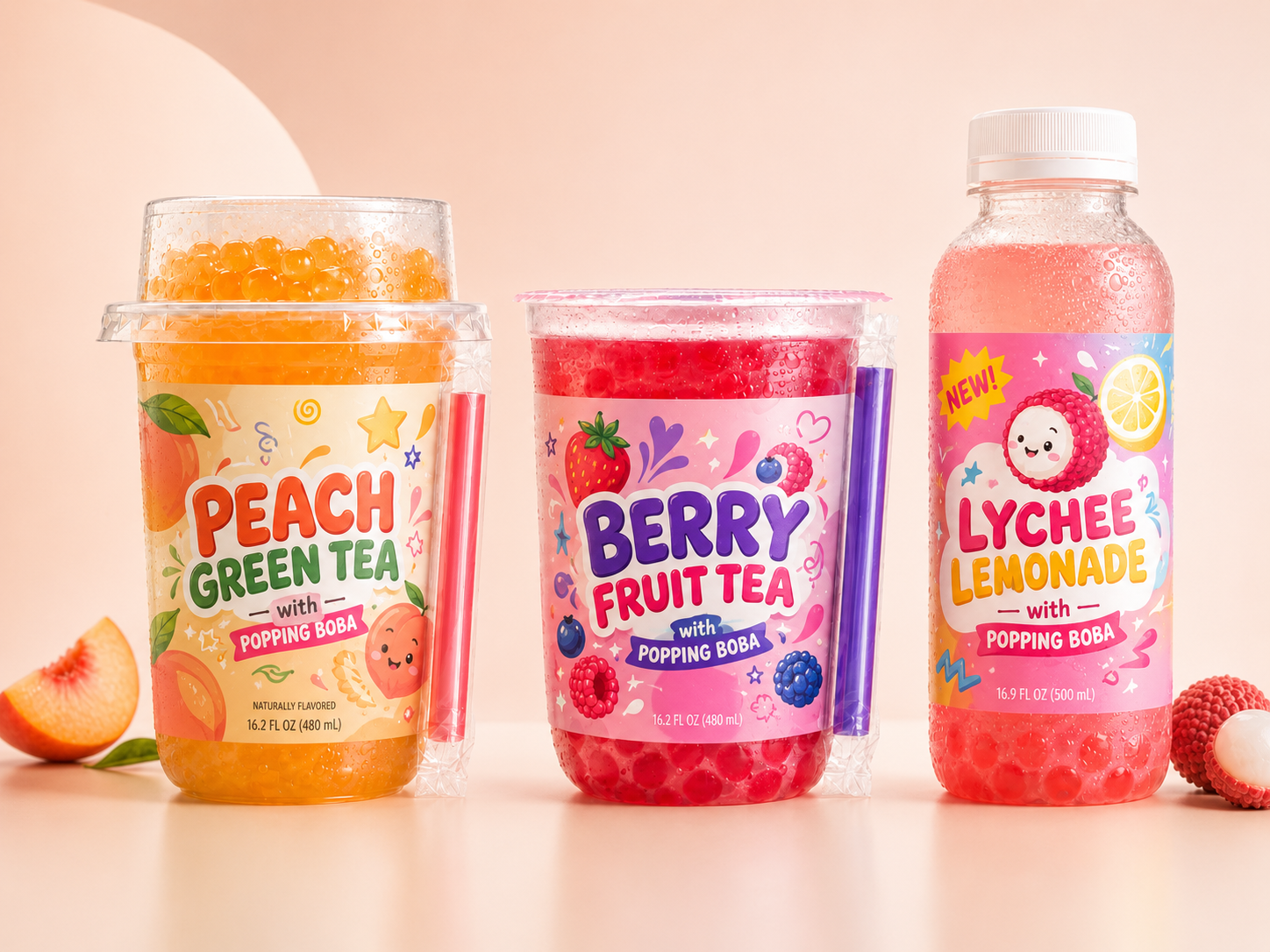
- sealed cup RTD formats
- bottled non-dairy RTD beverages
Each route offers a different way to make popping boba visible, understandable and commercially relevant.
1. Top-Cup RTD Concepts
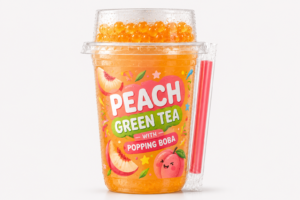
Top-cup RTD formats are one of the most visually distinctive ways to present popping boba.
In this format, the popping boba can be shown clearly as part of the product experience, either in a visible upper compartment or as part of a layered RTD concept. This makes the inclusion easy to understand before opening the product.
For manufacturers, top-cup concepts can be especially useful when the goal is to create a product that feels interactive, premium or novelty-driven while still being familiar as a ready-to-drink format. This route can work well for fruit teas, refreshment drinks and chilled beverage concepts where the inclusion is part of the visual appeal.
2. Sealed Cup RTD Concepts
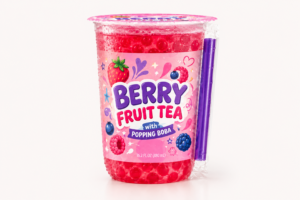
Sealed cup RTD concepts are another strong route because they feel familiar, convenient and highly visual.
This type of format can work particularly well for fruit tea, iced tea and lighter refreshment concepts. The cup allows the colour of the drink and the popping boba to be visible, which helps the consumer understand the product quickly.
For manufacturers, sealed cup RTD formats can be useful when the concept sits between refreshment, novelty and chilled convenience. The format can feel more immediate than a bottle, while still being suitable for a finished packaged beverage concept.
Examples could include berry fruit tea with strawberry popping boba, peach green tea with lychee popping boba or tropical fruit tea with passion fruit popping boba.
3. Bottled Non-Dairy RTD Concepts
Bottled non-dairy RTD beverages are especially important because they help move the application beyond classic bubble tea.
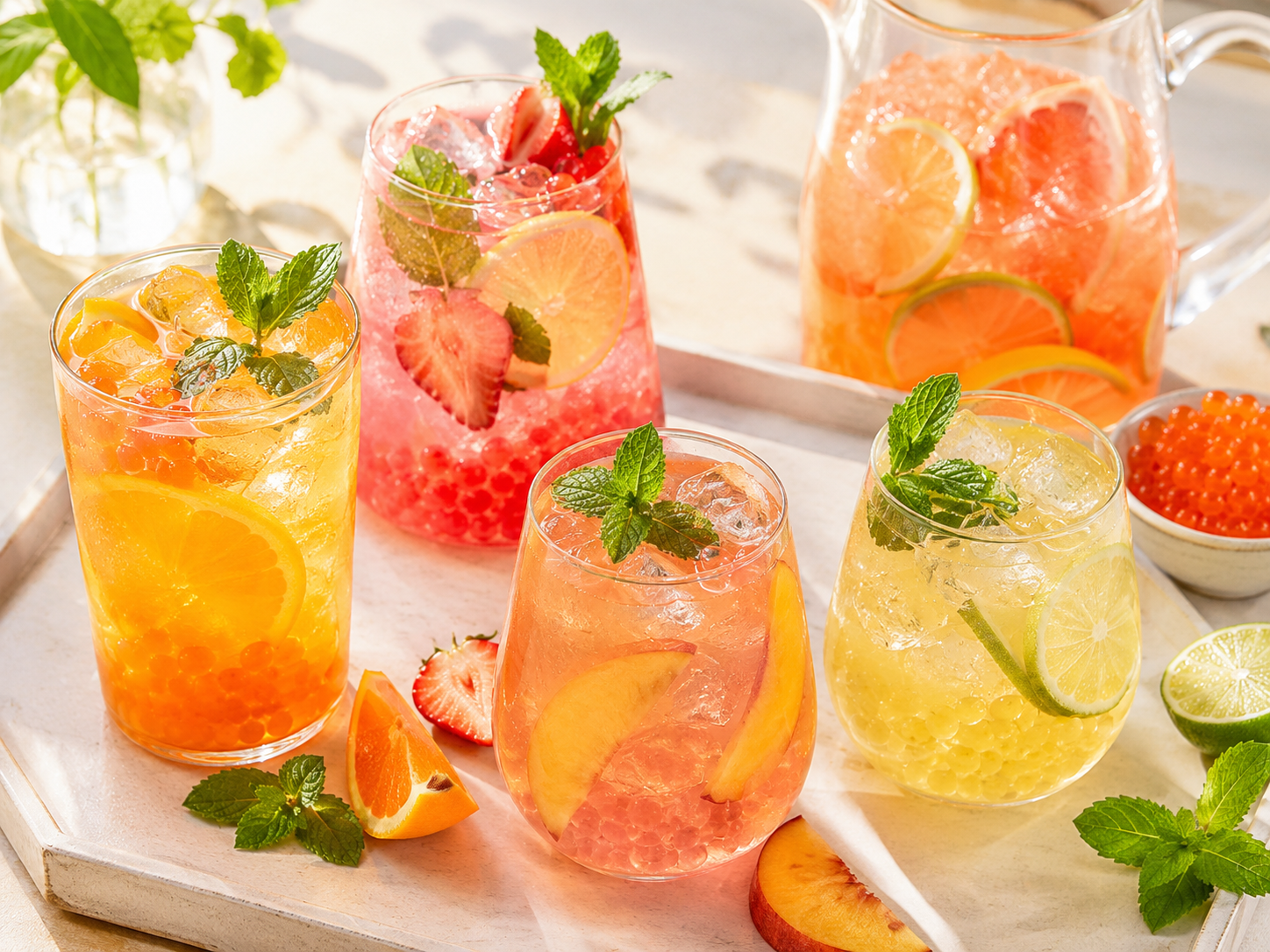
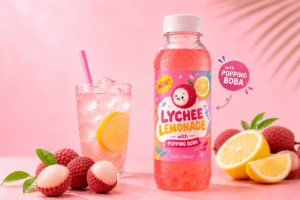
This route can include lemonade, fruit refreshers, iced tea, fruit tea, juice drinks and other clear or semi-clear beverages where the pearls can be seen through the packaging.
For manufacturers, this is a particularly interesting direction because it connects popping boba with broader beverage innovation. The product can still feel familiar as a bottled RTD, while the popping boba adds a visible and sensory point of difference.
This format can be useful for brands that want to create something modern and noticeable without making the product feel too niche or too strongly associated with bubble tea.
Examples might include lychee lemonade with popping boba, mango fruit refresher with passion fruit pearls, peach iced tea with lychee popping boba or berry lemonade with strawberry pearls.
Fruit-Led RTD Concepts Are a Natural Match
Fruit-forward RTD beverages are one of the most natural use cases for popping boba because the flavour logic is simple and easy to communicate.
The pearls can either match the main flavour direction or provide a complementary contrast that adds another layer to the concept. In both cases, the strongest RTD products usually have a clear and intuitive fruit story.
Common flavour directions include:
- mango
- strawberry
- peach
- passion fruit
- lychee
- mixed berry
- tropical fruit blends
Examples might include a mango RTD with passion fruit popping boba, a peach beverage with lychee pearls, a berry refreshment drink with strawberry popping boba or a tropical fruit beverage with mixed fruit pearls.
The key is that the flavour relationship should feel intentional. The pearls should support the product story, not feel like an unrelated addition.
Tea-Based RTD Beverages Also Offer Strong Potential
Tea-based RTD concepts are another strong route because they combine familiarity with a cleaner and more premium beverage platform.
Popping boba can help tea-based drinks feel more contemporary and more visually differentiated while still keeping the product rooted in a format consumers already recognise. This is especially relevant for fruit teas, green tea concepts, iced teas and lighter refreshment beverages where the pearls add flavour and visual energy without making the drink feel too indulgent.
For manufacturers, this can be a useful way to build a trend-aware beverage concept without moving too far away from established tea formats.
RTD Requires Careful Product Matching
RTD can be a strong application for popping boba, but it is also one of the formats where the surrounding liquid matters most.
Because popping boba is stored in syrup and the pearls contain water-soluble flavour and colour compounds, transfer can occur over time between the pearl and the surrounding beverage. Depending on the system, this can affect flavour expression, colour intensity or the contrast between the pearls and the outer liquid.
In practice, that means the final result depends on the specific formulation. Some concepts hold their intended contrast better than others, and some colour systems are more suitable for RTD than others. In certain cases, less transparent pearl colours may be especially useful when the beverage itself uses a strong or more aggressive colour system.
For manufacturers, this does not make RTD a weak application. It simply means RTD concepts benefit from application-specific testing rather than assuming all beverage systems will behave the same way.
Pearl Strength Matters in Industrial RTD Systems
RTD development is not only about how the finished drink looks on shelf. It is also about whether the pearls are robust enough for handling, transfer and industrial-scale supply.
That matters because ready-to-drink systems can place more stress on inclusions than many foodservice applications. A pearl with a slightly stronger skin can be beneficial in manufacturing environments where pumping, filling and bulk handling are part of the process. At the same time, the pearl still needs to deliver the right popping effect for the end user.
For industrial beverage manufacturers, pearl strength and consistency are therefore important parts of application fit, not just technical details.
Strong Shelf Impact in a Crowded Category
Shelf impact remains one of the clearest reasons popping boba works well in RTD beverages.
Many ready-to-drink categories are visually crowded, with products competing through packaging, flavour naming, colour systems and format choices. Popping boba adds another layer by giving the beverage a visible inclusion that helps it feel more dynamic before the consumer even tastes it.
This is especially useful in:
- fruit-led RTD beverages
- tea-based refreshment concepts
- premium chilled launches
- novelty beverage concepts
- limited-edition drinks
Where the pearls are clearly visible, the product has a stronger chance of creating immediate shelf interest.
A Strong Fit for Premium and Limited-Edition Launches
One of the reasons manufacturers choose popping boba is its usefulness in premium and limited-edition product development.
Because the pearls are visually distinctive, they can help a beverage feel:
- more premium
- more seasonal
- easier to notice on shelf
- better suited to a launch window or innovation program
This is particularly relevant when brands want to create launches tied to summer programs, fruit-led campaigns, flavour rotations or broader innovation pipelines. In these cases, popping boba helps create a beverage that signals novelty quickly without making the concept difficult to understand.
A Practical Route to Beverage Innovation
For many manufacturers, the appeal of popping boba in RTD is not just aesthetic. It is strategic.
The inclusion can give a beverage a stronger innovation story while still fitting within a familiar category. That makes it easier to create products that feel new without inventing an entirely separate beverage platform.
This can be especially useful when the goal is to:
- refresh an existing RTD line
- create a new limited-edition concept
- add a more modern sensory profile
- develop a clearer premium cue
- strengthen shelf differentiation in a mature category
In that sense, popping boba can help manufacturers build innovation that is visible, understandable and commercially relevant.
Practical Considerations for Manufacturers
When evaluating popping boba for RTD beverages, a few practical points matter.
Build around a clear flavour story
The pearls should reinforce the main concept or create a clearly intentional contrast.
Assess flavour and colour stability in the full liquid system
RTD applications can change over time depending on the interaction between the pearls and the surrounding beverage. The strongest concepts are usually the ones that have been tested in the final system rather than judged only at concept stage.
Keep visibility in mind
This category performs best when the inclusion is visible enough to support shelf differentiation and flavour communication.
Choose colours with RTD performance in mind
Depending on the beverage design, some pearl colours may hold their role more clearly than others over shelf life. Less transparent colours may be useful in some beverage systems.
Match the format to the category role
A top-cup RTD, sealed cup RTD and bottled non-dairy RTD do not communicate the same thing. Some formats may be better suited to chilled convenience, while others may be better suited to fruit refreshment, tea-based launches or premium limited editions.
Think about industrial handling and supply format
For industrial beverage manufacturers, pearl robustness, handling method and delivery format can all influence application fit. Depending on the setup, 135 kg barrels or 1,100 kg IBC tanks may be more suitable for larger-scale RTD programs and bulk processing.
Keep the product easy to understand
The strongest concepts are usually the ones consumers can read quickly through flavour, colour, packaging format and visible inclusion cues.
Why This Is One of the Strongest Manufacturer Applications for Popping Boba
Among manufacturer applications, RTD beverages remain one of the clearest ways to use popping boba as visible, commercially intuitive innovation.
They offer:
- strong visual differentiation
- a consumer-friendly textural point of difference
- natural fit with fruit-led flavour stories
- relevance for tea-based and refreshment concepts
- potential across top-cup, sealed cup and bottled RTD formats
- relevance for premium and limited-edition launches
- a practical route to beverage innovation
For manufacturers looking to create a more noticeable and more contemporary RTD concept, this is one of the best categories to explore.
Why Choose Nordic Boba
At Nordic Boba, we support manufacturers with popping boba developed for real commercial use.
With European production, certified manufacturing and scalable supply, we help customers create beverage concepts that are both visually strong and commercially realistic. For RTD applications, that also means supporting development with the realities of the system in mind, including flavour fit, colour behaviour, pearl robustness and industrial handling requirements.
If you are exploring RTD beverages or other fruit-led drink applications with popping boba, we can support flavour direction and product development based on your concept, format and process.