Is Popping Boba Vegan and Gluten-Free?
You’ve seen it on social media. Maybe even tried it in a trendy café in Copenhagen or stumbled upon it in a bubble tea shop tucked into your local shopping street—those colorful, jewel-like orbs that burst in your mouth with sweet, fruity juice. That’s popping boba.
It’s vibrant, playful, and strangely addictive. But if you’re the kind of person who scans ingredient lists or fields dietary questions from customers, friends, or family—one question bubbles up fast: Is popping boba vegan? Is it gluten-free? And what about allergens?
Let’s unpack the truth behind these little pops of joy.
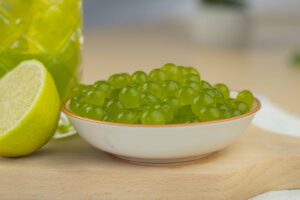
What Is Popping Boba Made Of, Anyway?
Let’s start with what’s actually in it.
Popping boba is created through a process called spherification—a method that turns flavored liquid into soft, edible spheres that hold their shape until you bite them. The outer “shell” forms thanks to an interaction between sodium alginate, a compound extracted from brown seaweed, and calcium lactate, a gelling agent.
Here’s what you’ll typically find on an ingredients list:
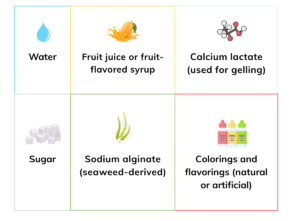
No gelatin. No dairy. No flour. Just food science doing its thing—with a fruity twist.
The core recipe stays consistent across most brands, though colors and flavorings may vary slightly. It’s surprisingly simple once you break it down.
So… Is Popping Boba Vegan?
The good news? Yes, popping boba is usually vegan.
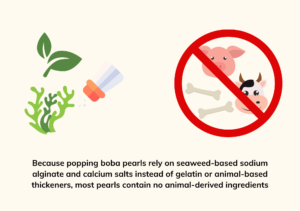
Now, let’s address the one ingredient that often trips people up: calcium lactate. Despite sounding like it belongs in the dairy aisle, it doesn’t. The “lactate” part comes from lactic acid, which is typically produced by fermenting plant-based carbohydrates. It’s used in everything from pickles to supplements and is generally considered vegan-friendly.
That said, ingredients lists can be tricky.
Some imported or private-label popping boba products may include non-vegan additives like honey, milk-derived flavorings, or certain colorants. One common example is carmine (also known as cochineal) — a red pigment derived from insects that’s sometimes used to color bright red or pink boba. It’s not always obvious on labels, so unless a product is specifically marked as vegan, it’s worth looking closer.
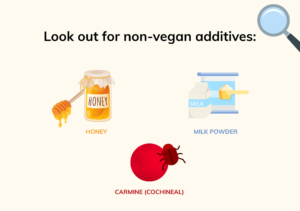
Bottom line? If you’re aiming for fully plant-based, always read the label—or better yet, look for certified vegan products. Stick to ingredient lists you understand, and be cautious with vague terms like “natural flavor” or “color,” especially if the product isn’t clearly labeled.
And What About Gluten-Free? Can Celiacs Join the Fun?
Absolutely.
Popping boba is naturally gluten-free because it doesn’t include any wheat, barley, or rye derivatives. Ingredients like sodium alginate and calcium lactate are gluten-free by nature. The juice or syrup base? Also gluten-free.
But—and this is important—gluten concerns sometimes don’t come from the ingredients themselves. They come from the manufacturing environment.
Cross-contamination can happen if the facility processes other products with gluten. So while the boba itself might be made from gluten-free ingredients, people with celiac disease or high sensitivity should still look for:
When in doubt, contact the supplier or check the packaging for gluten-free labeling. It’s a small step that makes a big difference for anyone managing dietary restrictions.
Are There Any Allergens in Popping Boba?
Compared to a lot of processed toppings, popping boba is refreshingly clean when it comes to allergens.
Here’s what it typically doesn’t contain:
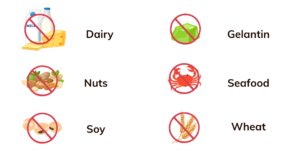
Still, no product is entirely risk-free. Some things to watch out for include:
-
Artificial colorings – Certain synthetic dyes like Red 40 or Yellow 5 can cause sensitivities in a small percentage of people, especially children.
-
Flavorings – Some labels just say “flavoring” or “natural flavors,” which can hide dozens of ingredients, including allergen-derived ones.
-
Starches or emulsifiers – Occasionally, manufacturers add texturizers that might not be clearly labeled.
If you’re buying popping boba for a food business, these questions really matter. Allergens aren’t something you want to leave to chance. It’s worth seeking out suppliers with clear allergen labeling and transparent ingredient sourcing.
Label Sleuthing: What to Watch For
Not all ingredient lists are created equal. Some are refreshingly straightforward; others read like chemical equations.
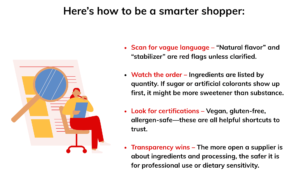
When in doubt, contact the manufacturer. If they’re serious about their product, they’ll be happy to give you clear answers.
Real-World Use: Cafés, Franchises, and At-Home Boba Bars
Here’s where this all gets practical.
If you’re running a café, food truck, or even starting a small boba business from home, inclusive ingredients are no longer optional. They’re part of what customers expect. Offering a topping that’s vegan, gluten-free, and allergen-friendly helps you:
-
Avoid dietary exclusions at the register
-
Appeal to younger, wellness-conscious audiences
-
Simplify your menu without limiting creativity

Customers don’t want to ask awkward questions. They want to trust what they’re ordering. And honestly? You want your staff to be able to answer those questions without reaching for a binder.
Even for home use, it just makes sense. Popping boba that’s free of common allergens means fewer worries when friends drop by or kids get curious.
Final Thoughts: Small Pop, Simple Answer
So, is popping boba vegan and gluten-free?
Most of the time, yes. When it’s made with straightforward ingredients and clear labeling, it’s an easy, inclusive option for a wide range of diets.
At the end of the day, popping boba’s just a fun, fruity topping—but knowing it fits into vegan and gluten-free menus makes it even easier to enjoy. Whether you’re stocking a café or making bubble tea at home, it’s nice when the extras don’t come with extra complications.