Popping Boba vs. Tapioca Pearls

Popping Boba vs. Tapioca Pearls: Key Differences Explained
So, what’s the deal with boba?
Bubble tea isn’t just a drink anymore—it’s a cultural icon, a brand builder, and, for many, a full-blown lifestyle. And if you’re looking to get into the bubble tea business, or even just trying to keep up with customer questions, you’ll quickly bump into a big decision: popping boba or tapioca pearls?
Now, to the untrained eye, they might seem like interchangeable little balls floating at the bottom of a colorful drink. But trust me—they’re worlds apart in taste, texture, production, and even branding potential.
So let’s unpack this. Carefully. Juicily. And maybe a little bit chewily.
Chewy or Juicy? Let’s Start with Texture
Here’s the thing—texture can make or break the bubble tea experience.
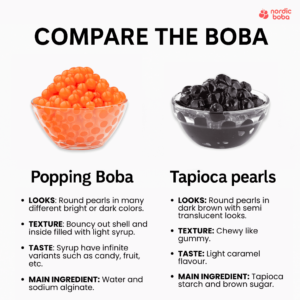
Popping boba? Think of it like the bubble wrap of the tea world. Light pressure and—pop!—you get a quick burst of fruity flavor. It’s juicy, playful, and instantly satisfying. There’s almost a childlike joy to it, like that moment you bite into a cherry tomato and it surprises you with sweetness.
Tapioca pearls, on the other hand, are the chew-lover’s dream. They’re dense, springy, and stubborn in the best way. The Japanese have a term—mochi mochi—to describe this kind of chewy resilience. It’s meditative. Rhythmic. You don’t just drink a milk tea with tapioca; you work your way through it like a slow dance.
And customers do have strong opinions. Some are all about that satisfying chew, while others want every sip to pop with flavor.
Made from What, Exactly?
Let’s talk ingredients, because—especially if you’re in foodservice—people will ask.
Popping boba is usually made from a syrup base wrapped in a thin skin made of sodium alginate and calcium chloride (sounds scary, but it’s just seaweed science). The result? Vegan-friendly, gluten-free, and visually stunning.
Tapioca pearls are made from cassava root starch. It’s a pantry staple in a lot of South American and African households, but in the world of bubble tea, it’s boiled into small balls and soaked in brown sugar syrup or honey for sweetness.

How They’re Made (No, It’s Not Magic)
Popping boba production leans on spherification—a food science technique that still sounds fancier than it looks. Basically, syrup is dropped into a calcium solution, and the surface gels instantly. Voilà—tiny bubbles of joy.
They’re produced at scale in factories and sent to cafés ready to use. That’s a huge plus for efficiency. You don’t need a stove, timer, or someone sweating over a pot of pearls.
Tapioca, though? It’s old-school. You’ve got to boil it fresh (usually 30-45 minutes), then soak it in syrup, and use it within a few hours—or it gets hard and unpleasantly starchy. You’ll need to train staff, time prep right, and toss leftovers. It’s more labor-intensive but also more traditional, which matters in certain markets.

Flavor, Sweetness, and What Customers Actually Notice
Popping boba comes flavored out of the gate—think passion fruit, lychee, mango, or strawberry. The flavor is immediate, sharp, and unmistakable. Kids go crazy for it. Honestly, adults do too, even if they won’t admit it.
Tapioca is much more… neutral. On its own, it doesn’t taste like much. But that’s kind of the point. It absorbs the flavor of whatever syrup you soak it in, which means you control the sweetness. A classic brown sugar milk tea? That slow-cooked caramel-y bite? That’s tapioca doing its thing.
So what’s better? That depends. For fruit teas, popping boba adds a fun zing. For creamy drinks like Thai tea or taro, tapioca holds its own beautifully. It’s about the mood you want your drink to set.
Visuals Matter More Than You Think
Let’s be real—people don’t just drink boba. They post it.
Popping boba? Bright, translucent, and colorful. It’s made for Instagram stories and “guess the flavor” polls. Limited-time campaigns, like a lavender peach flavor with pink-purple boba? That stuff prints money.
Tapioca pearls? Not so flashy. But there’s a sense of tradition in that inky-black cluster at the bottom of the cup. It screams “authentic,” which resonates with customers looking for “the real deal.”
So yeah, what your pearls look like can influence your brand, especially if you’re doing direct-to-consumer drinks or standing out in a crowded menu.
What Works for What? Use Cases That Make Sense
Here’s where it gets practical.
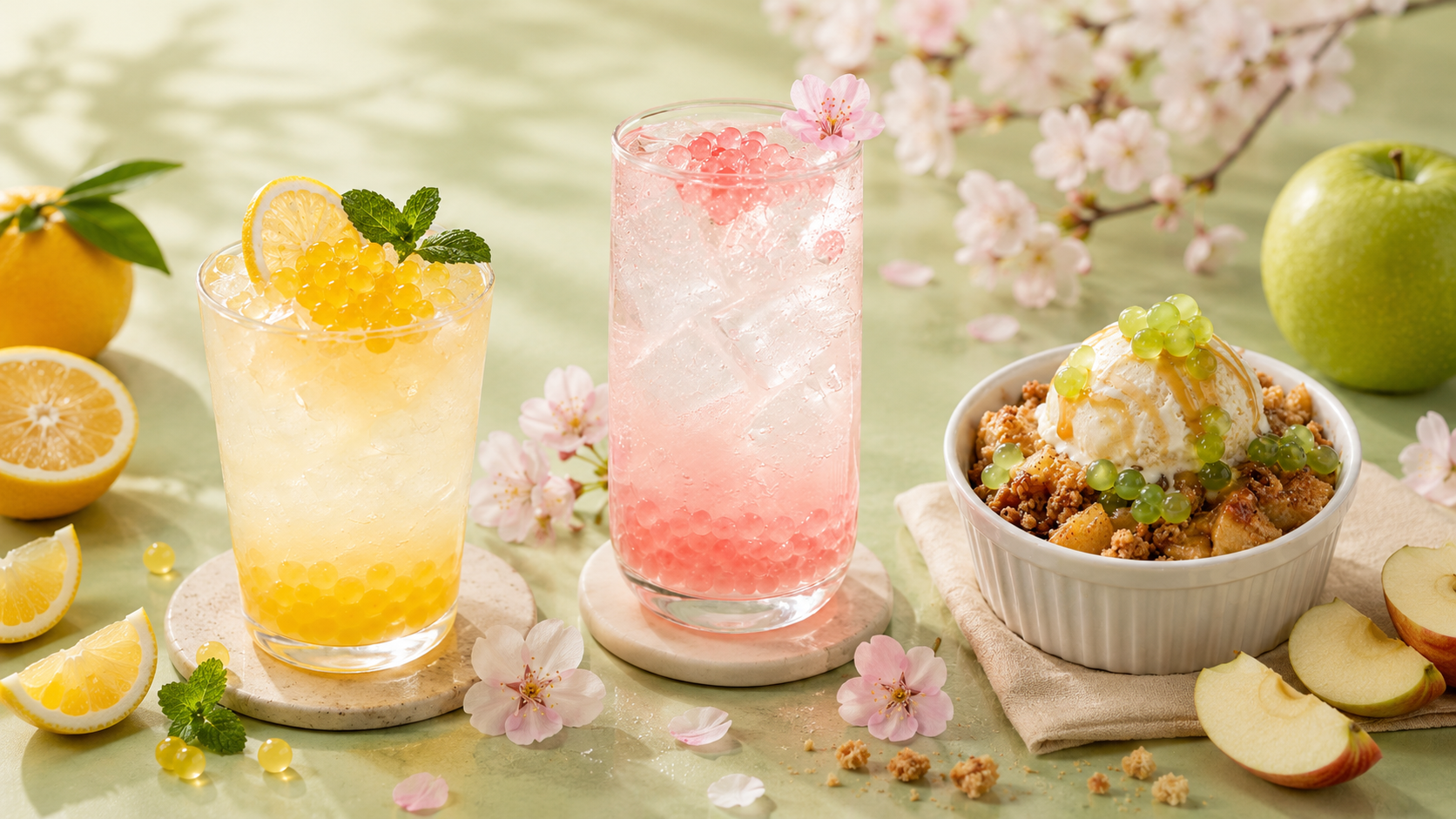
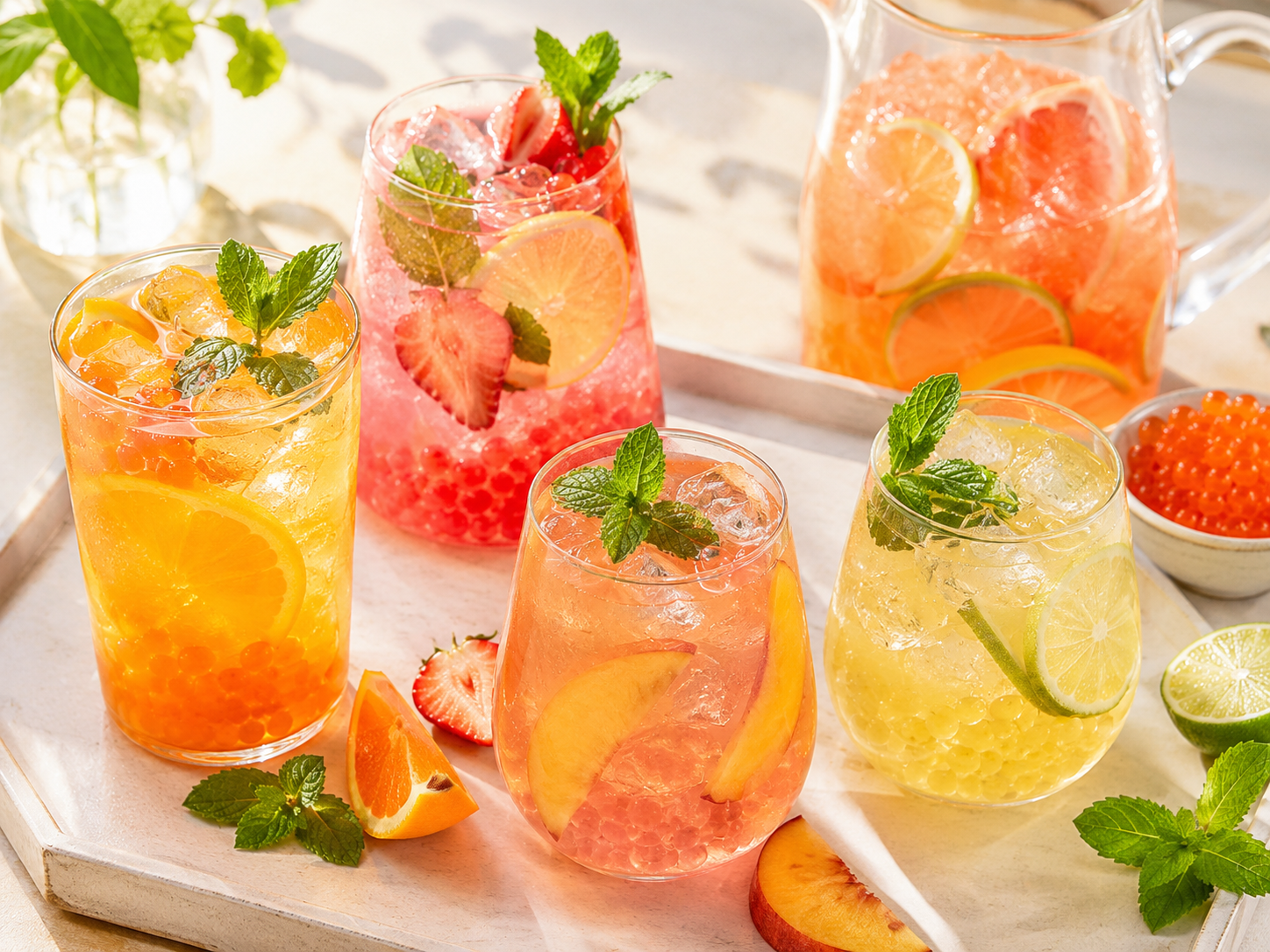
- Fruit teas, lemonades, slushies: Popping boba all the way. The juice burst adds layers to light drinks.
- Milk teas, lattes, and coffee blends: Tapioca pearls are better. Their chew gives body and rhythm to creamy drinks.
- Cocktails, mocktails, and dessert cups: Popping boba is king—eye-catching and mess-free.
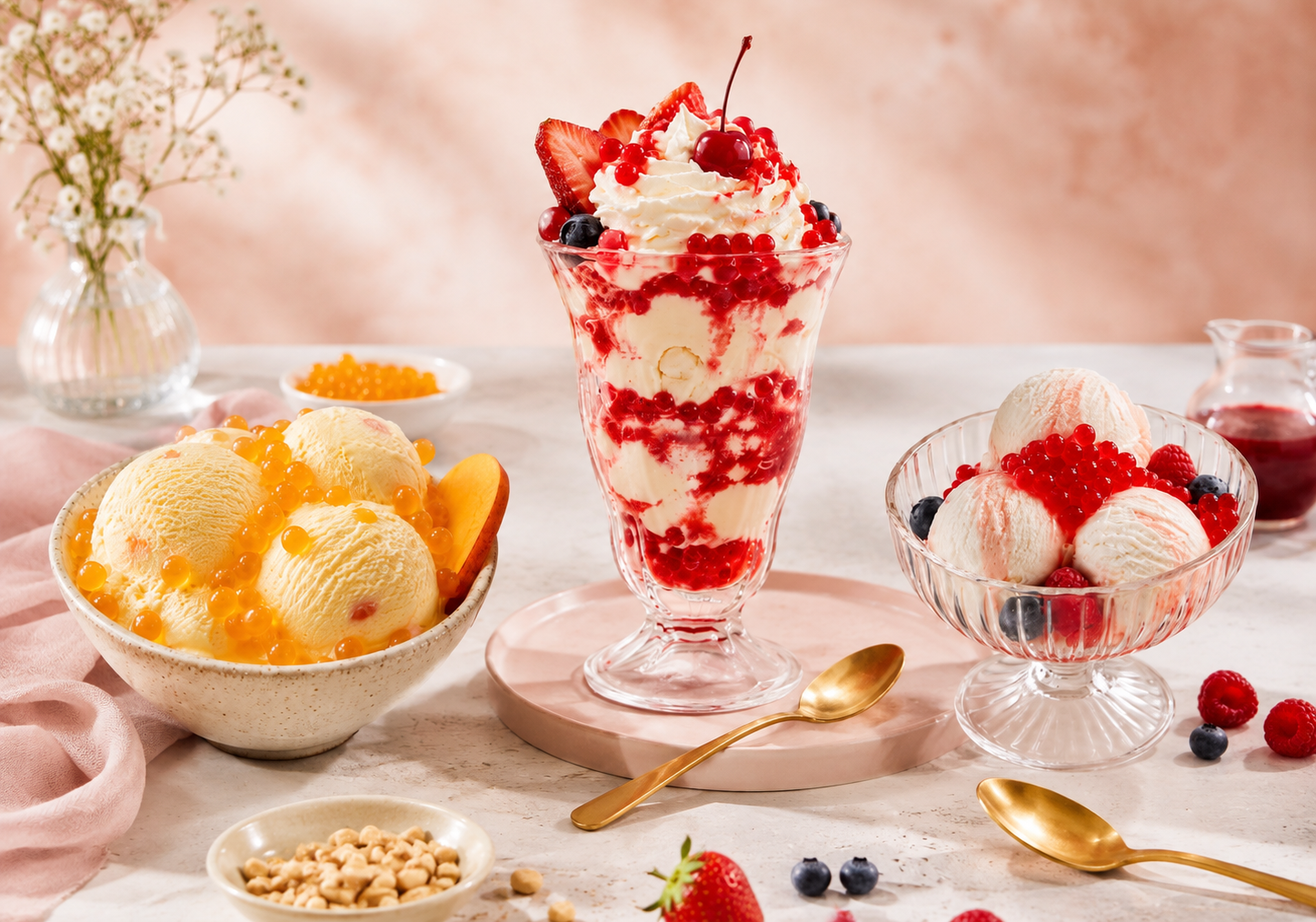
Some cafés are even getting fancy: think frozen yogurt topped with popping boba, or Japanese shaved ice with syrup and pearls. Creativity wins, and having both on-hand gives you options.
Cost, Storage, and the Backend Reality
Let’s talk operations—because behind the flavor fun, you’ve got margins to protect.
Popping boba is shelf-stable, prepacked, and easy to store. You open a tub, scoop, and serve. We advise 1 month shelf life after opening, but if stored cleanly they can be kept for months in terms of microbiology. That’s gold for cafés with unpredictable foot traffic.
Tapioca? It’s a daily prep item. You need boiling equipment, time, and someone trained not to undercook or overcook. You can technically keep them for longer, but the consistency is very important, so you’ll have to throw some out to keep maintain high quality product. That’s baked into the model.